

2025-05-21
Understanding ERW Steel Pipe Technology
Understanding ERW Steel Pipe Technology
What is ERW Pipe? A Technical Overview
High-Frequency Straight Seam Welded Pipe, commonly known as ERW pipe or ERW steel pipe, is a type of welded steel pipe manufactured through a specialized process. The ERW pipe welding process utilizes the skin effect and proximity effect of high-frequency current. This process locally heats the edges of the steel strip to a molten state, and then roller extrusion is applied to achieve intergranular bonding, forming the pipe.
Key characteristics of ERW steel pipe include: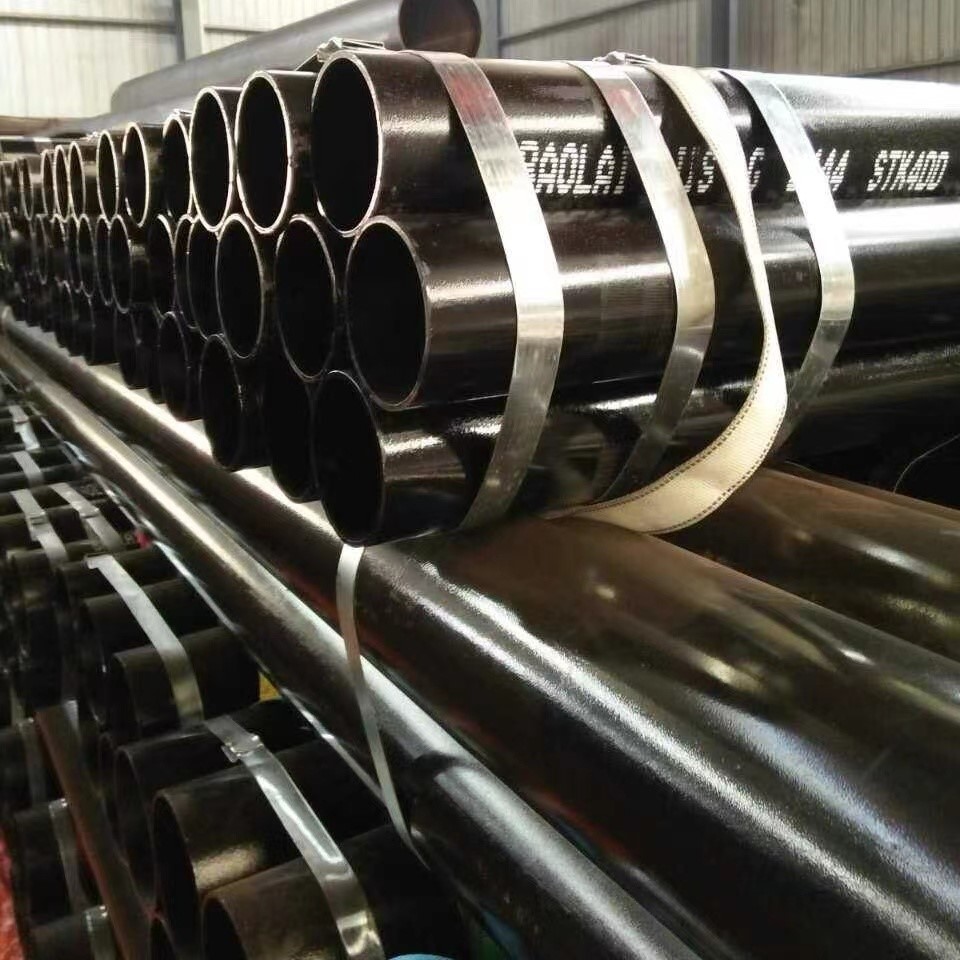
- No Filler Material Needed: The welding process eliminates the need for filler material, resulting in no spatter and a narrow heat-affected zone (only 1-3mm).
- Efficient Forming: ERW pipe production lines can achieve high production speeds, ranging from 20 to 70 meters per minute, significantly faster than traditional arc welding processes.
- Material Versatility: ERW steel pipe can be made from various materials, including low carbon steel and low alloy steel (yield strength ≤ 500N/mm²).
ERW Pipe Manufacturing Process
The ERW pipe manufacturing process involves a series of core steps:
- Preprocessing: The steel plate undergoes ultrasonic testing, milling to control plate edge parallelism, and pre-bending (with thicker plates requiring a press machine).
- Forming: The steel strip is gradually shaped into a "J+C" form by a series of rollers, creating an open tube blank.
- Welding: Internal welding may involve longitudinal multi-wire submerged arc welding. External welding uses a high-frequency induction coil to heat the strip edges (at a frequency of 200-250kHz), followed by extrusion rolling to fuse the grains.
- Post-Processing: This includes deburring, sizing to control the outer diameter (± 0.5mm), water cooling, and non-destructive testing (X-ray/ultrasonic).
Advantages of ERW Steel Pipe
Comparing ERW steel pipe with other pipe types reveals key advantages: